
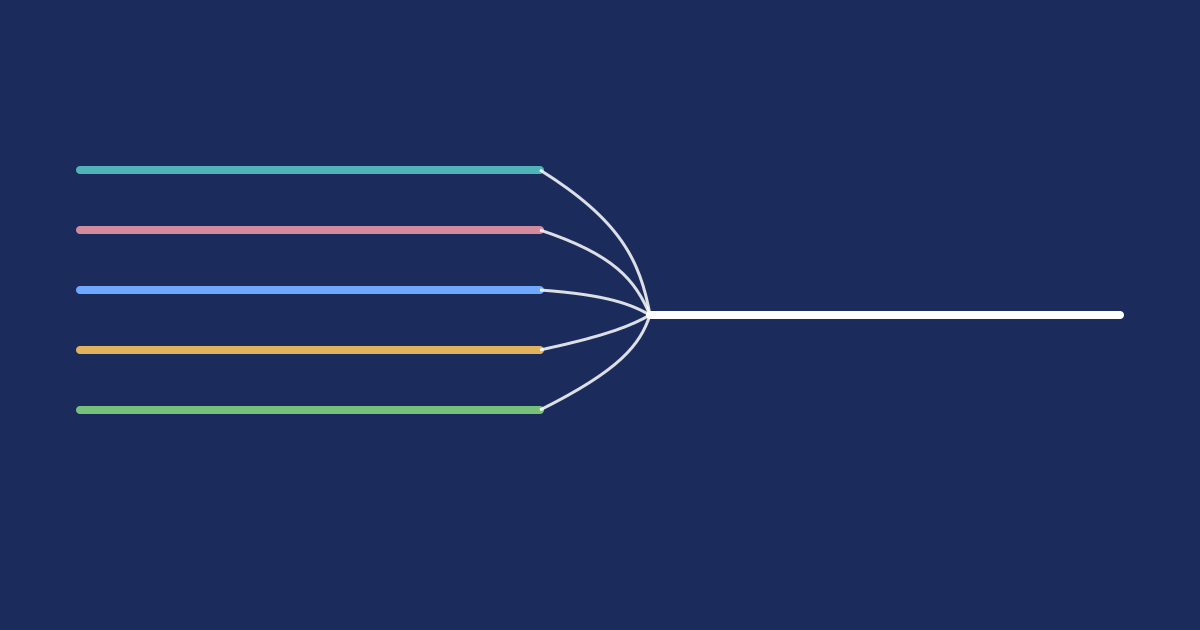
Most longevity practices do not have a data problem. They have an interpretation problem.
Patients now arrive with panel history, wearable trends, and protocol context. Clinics can produce richer data than ever, yet follow-up conversations still collapse into fragmented marker updates: LDL moved, HRV changed, glucose improved. The patient hears detail without direction.
A synthesis layer solves that gap. It does not replace panel quality. It turns panel quality into longitudinal clarity.
The operational gap in modern longevity care
Three things are true at once:
- Panel depth is improving across concierge and performance medicine.
- Wearable signal coverage is now routine.
- Patient confidence often depends on whichever metric moved most recently.
That is an unstable decision environment. Without a unifying score framework, small fluctuations get over-weighted and slow but meaningful progress is under-recognized.
What a synthesis layer does
A synthesis layer standardizes four jobs:
- Normalizes mixed inputs into comparable domain scores.
- Shows whether total trajectory is improving, flat, or degrading.
- Preserves domain-level detail for intervention planning.
- Creates repeatable language for physician-patient communication.
This is why practices need a synthesis layer, not another panel vendor.
Why this matters to clinic performance
The benefit is not just scientific clarity. It is operational leverage:
- Better patient comprehension at follow-up.
- Higher confidence in protocol iteration.
- Cleaner retention narrative because progress is visible.
- Less dependence on one-off biomarker storytelling.
When a patient can see movement in one longitudinal score plus domain drivers, behavior adherence improves because the feedback loop is coherent.
A practical standard for the next phase
The next generation of longevity care will still run panels. It will also score trajectories.
Clinics that adopt synthesis early will communicate risk and progress more clearly than peers relying on disconnected data snapshots.
If you are evaluating a clinic implementation path, start with one question: can your current workflow answer “are we moving in the right direction” in one minute, with evidence the patient understands?
If not, the synthesis layer is no longer optional.